So you just got engaged. Congratulations!! How very exciting!! Now comes the part where everyone asks if you have picked a date yet, and you realise there are approximately one thousand decisions to make before that question even has an answer.
The season. The venue. The guest list. The dress. The food. And somewhere in the middle of all of it, the photography.
Here is something most newly engaged couples do not know yet: the single biggest thing that determines how your wedding photos turn out is not just the photographer you choose, as important as that is. It is the timeline you build together. A well-planned Melbourne wedding day timeline means your photographer can do their best work. A rushed or poorly structured one means even the most talented Melbourne wedding photographer in the world is working against the clock, the light, and the logistics. And nobody wins when that happens. This guide is for you if you are just starting to think through what your day looks like. Not six weeks out, not in final planning mode, but right now, early, when you still have time to get this right. Because planning your timeline well from the beginning is one of the most valuable things you can do for yourself, and your day.
Start here: your locations shape everything
Before you think about ceremony times, portrait windows, or golden hour, you need to think about locations. Specifically, how many you have and how far apart they are.
Most Melbourne weddings involve at least three locations: somewhere to get ready, the ceremony venue, and the reception venue. If your ceremony and reception are at the same place, that removes one transition and simplifies things. But if all three are separate, the travel time between each of them is a real factor in your timeline, and one that couples often underestimate.
Here is why this matters for your photography. If you are working with a single Melbourne wedding photographer, which most couples are, there is only one of them. They cannot be at your getting ready location and at your ceremony venue at the same time. The travel time between locations is not photography time. It is transit time, and it comes directly out of the shooting window.
A 30 minute drive that turns into 45 with traffic has to come from somewhere. Usually it comes from your portrait time, or from the buffer that was keeping your day relaxed.
Questions to ask early:
- How far is your getting ready location from your ceremony venue?
- How far is your ceremony venue from your reception?
- Is there parking at each location, or will your photographer need to factor in walk time?
- Are any locations in Melbourne's CBD where traffic or parking could add unpredictable time?
Map it out. Look at the realistic drive times, not the best-case ones. Then build those transitions into your timeline as fixed blocks, not assumptions.
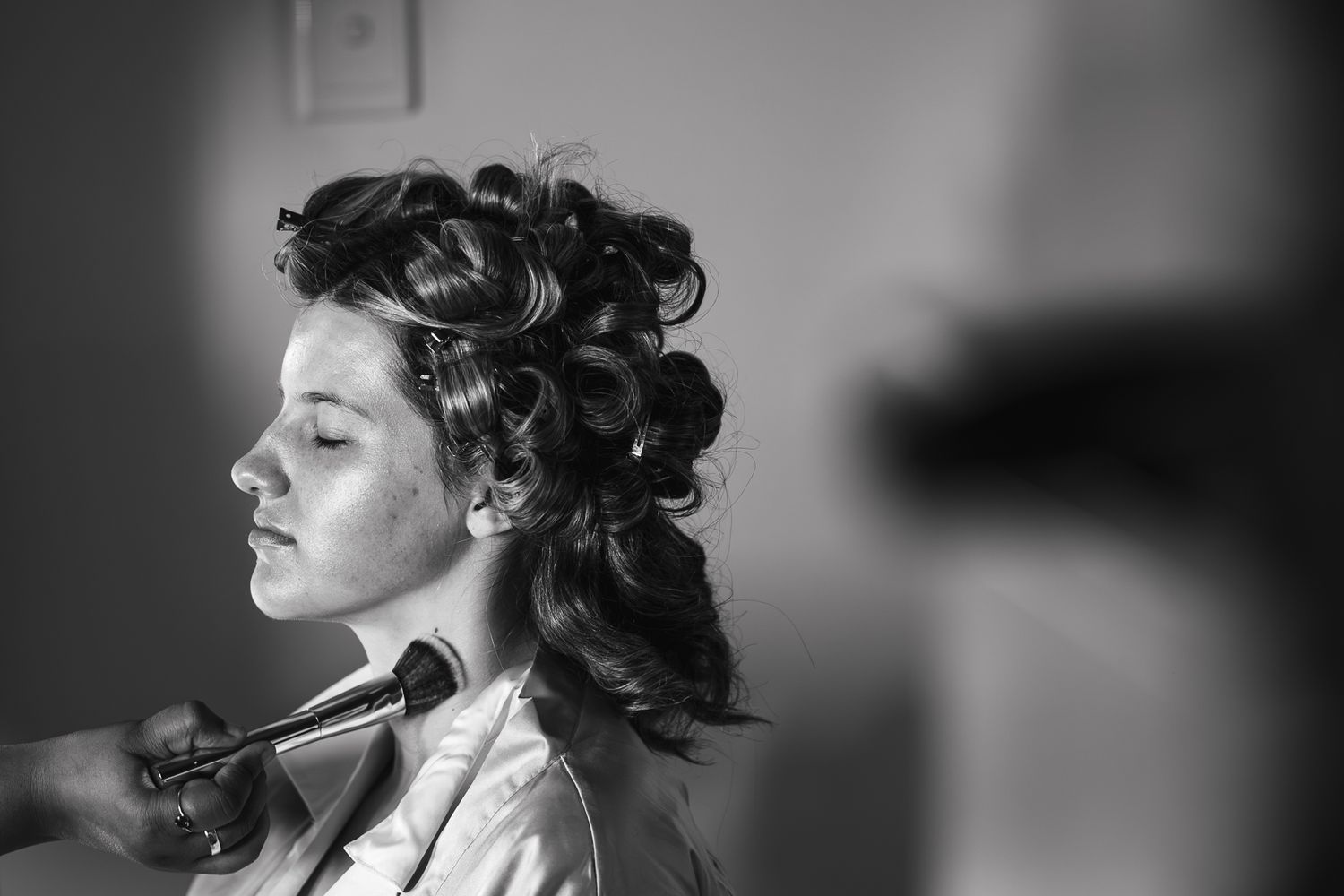
Getting ready: start earlier than you think you need to
The getting ready portion of your day is almost always the most emotionally rich. It is also the most commonly underestimated when it comes to time.
Your mum doing up the last button. Your partner's hands shaking slightly as they put on their cufflinks. The first time you put on the shoes. The moment your whole crew sees you in your dress. These are the photos that make people quietly cry when they open their gallery a week after the wedding.
They only happen if there is time to let them unfold.
What I recommend: Allow at least 60 to 90 minutes for getting ready coverage before you need to leave for your ceremony venue. And then add travel time on top of that.
Here is the part most couples do not plan for. If your ceremony starts at 3PM and it is a 30 minute drive to the venue, you are leaving at 2:30PM. Which means getting ready photography wraps by 2:15PM at the latest. Which means hair and makeup should be completely finished by 1:45PM to give you buffer. Work backwards from the ceremony start, not forwards from when you think you will be ready.
One more thing worth thinking through early: are you and your partner getting ready in the same location or different ones? Many couples get ready separately, sometimes across town from each other. If you have one photographer, they will most likely be with the bride's side for the majority of the getting ready coverage with little to none of the groom's.
If you can get ready in the same building, even in separate rooms or different floors, it makes an enormous difference. Your photographer can move between both without losing time to travel, which means more coverage on both sides and a more relaxed morning for everyone.
It is a small logistical decision that is worth considering when you are choosing or confirming your getting ready venue.
A few things that consistently help:
- Book your hair and makeup artist to finish earlier than you actually need. They will almost always use that buffer.
- Have your dress, shoes, rings, and any meaningful details in the same room before your photographer arrives. This sounds obvious but it saves real time.
- Plan for the room to be a bit loud and full of people. The best getting ready photos are not staged. They are real.
Wedding party portraits before you leave. One thing worth building into your getting ready time that many couples overlook: portraits of the bride with her bridesmaids and parents fully dressed and ready, before you leave for the ceremony. Same goes for the groom with his groomsmen. These are genuinely beautiful photos and they make your post-ceremony time so much more relaxed. Once everyone is dressed and looking great, it takes ten to fifteen minutes and gives you a set of shots you would otherwise lose entirely. Your Melbourne wedding photographer will love you for it, because it means after the ceremony the focus can be almost entirely on you and your partner.
Pro-tip: Grooms and Groomsmen generally gets ready faster and earlier, so the photographer can cover the grooms and groomsmens first, before continuing with the bride + bridesmaids.
First look or traditional reveal: a decision that reshapes your day
This is one of the most significant decisions you will make about your wedding day timeline, and it is worth understanding early.
A first look is a private moment, just the two of you, where you see each other for the first time before the ceremony, with your photographer there to capture it. A traditional reveal means that moment happens at the end of the aisle, in front of everyone.
Neither is more romantic than the other. They are genuinely just different.
If you do a first look: Your photographer can complete most of your couple portraits and a significant chunk of your wedding party photos before the ceremony even starts. This means your cocktail hour can actually be yours. You are at your own party, with your guests, present and relaxed, instead of disappearing for 90 minutes of photos straight after you have just gotten married.
If you choose a traditional reveal: Plan for a longer portrait window after the ceremony, ideally 60 to 90 minutes before the light goes. Your wedding party needs to know in advance that they are staying for photos.
There is no wrong answer. But it is a decision worth making early because it changes almost everything else.
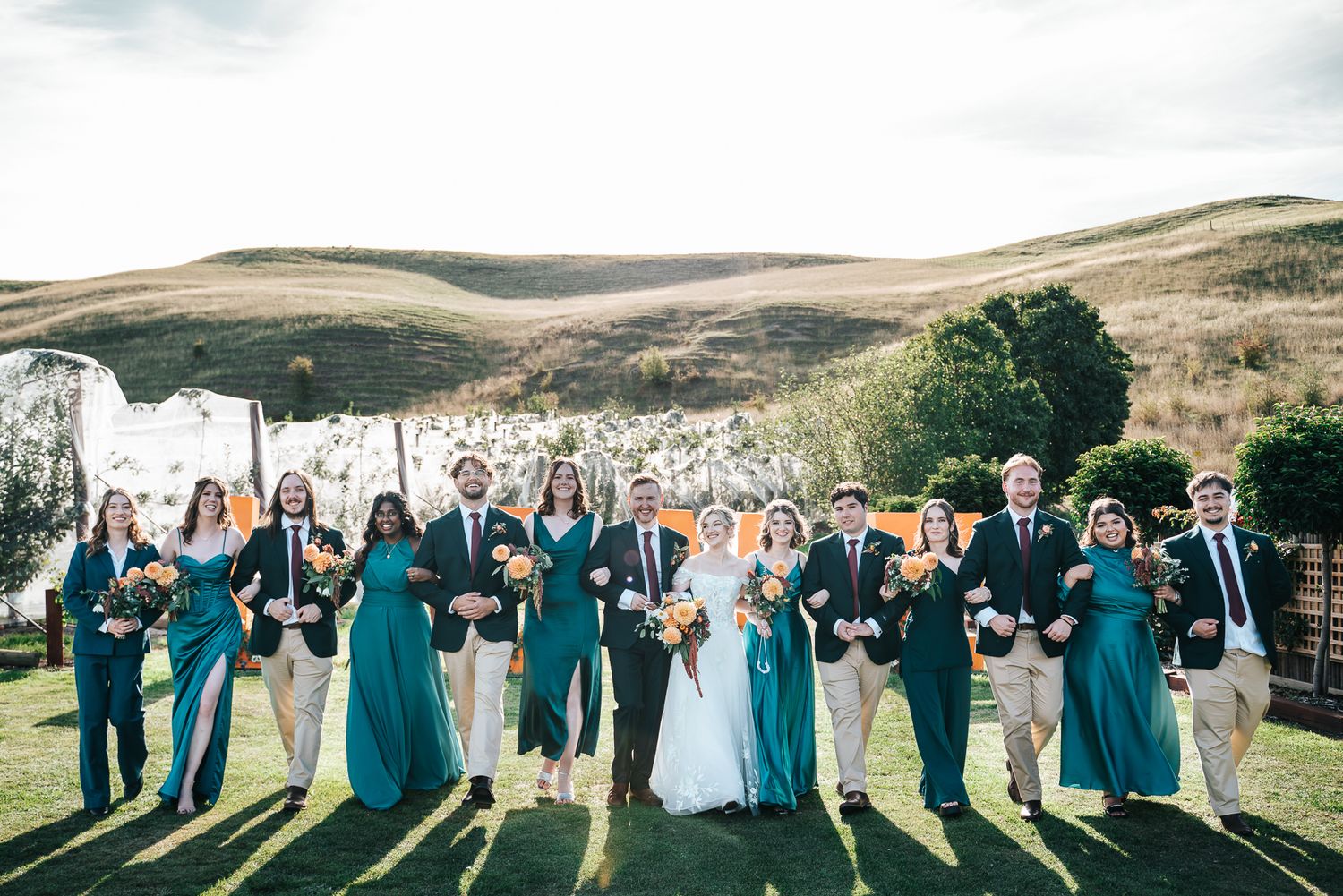
Ceremony: give the whole thing room
Most ceremonies run 20 to 45 minutes, but the photography story around your ceremony is much wider than that.
Guests arriving. Your wedding party walking in. The look on your partner's face when they first see you. The signing. The first kiss. The walk back down the aisle with everyone losing their minds. That is a lot to capture, and it all requires your photographer to be in position before it starts.
What I recommend: Plan for your photographer to arrive at the ceremony venue at least 30 minutes before it begins. This gives them time to walk the space, read the light, and know exactly where to be for key moments. It also gives them the chance to have a quick conversation with your MC and videographer if you have one, so everyone is coordinated before the ceremony starts and nobody is stepping on each other during the moments that matter.
One detail that often surprises people: the light inside ceremony venues is completely different from the light outside. If your ceremony is indoors, particularly in a church or historic venue, your photographer needs to understand how to work with that light before the ceremony starts.
One moment that happens immediately after almost every ceremony and is worth planning for: the group photo. All your guests together, in one frame, right after you have just gotten married. It is chaotic and joyful and one of the most-loved photos from the entire day.
It does take a few minutes to organise, especially with a large guest count. Your photographer will need a clear sightline and enough space for everyone to be seen. If your ceremony venue has a natural spot for this, such as steps, a lawn, or an open courtyard, make a note of it early and let your MC or celebrant know to keep guests together straight after the ceremony before they scatter to cocktail hour.
Golden hour: the 40 minutes you genuinely cannot get back
Golden hour is the warm, soft light that happens roughly 30 to 60 minutes before sunset. It is the light behind virtually every wedding photo you have ever stopped scrolling for. It is also completely non-negotiable in terms of timing.
When that light is gone, it is gone. You cannot recreate it with a different location or a later session. The sun sets once.
Melbourne sunset times vary enormously across the year. A December wedding can give you golden hour as late as 8:30pm. A June wedding might see it arrive before 5pm. If you are planning a wedding in Melbourne, check the sunset time for your actual date before you lock in your ceremony time. Then work backwards.
You need a minimum of 45 minutes between your ceremony ending and the sun dropping below the horizon. That window needs to cover family formals, getting from the ceremony to wherever you are doing portraits, and the couple session itself. If that window is tight, consider whether pushing your ceremony slightly earlier is possible.
My honest advice: Everything else in your timeline can flex. Golden hour cannot. Protect it early.
Wedding party and family portraits: plan these before the day
Wedding party and family photos are some of the most logistically complex moments of the day, simply because they involve the most people in the most combinations.
Here is the thing. If you do bridal/wedding party portraits before the ceremony, which I strongly recommend, most of this work is already done. You arrive at your ceremony with your best photos of the wedding party already in the bag. After the ceremony, you can move straight into family formals and couple portraits without needing to round everyone up again.
For family formals, the two things that make the biggest difference are simple: a list and a designated person who knows everyone.
Write your group combinations down before the day. Both families together, just your immediate family, just their immediate family, grandparents, and so on. Every combination on the list takes roughly three minutes. Every combination you decide on the spot takes significantly longer, because someone is always missing.
Nominate one person on each side of the family who can move people around with confidence. This one decision probably saves 20 minutes.
Allow 20 to 30 minutes for family formals, more if you have a large extended family, multiple cultural family dynamics to honour, or specific combinations that matter to you. Melbourne's west is one of the most multicultural parts of the city and extended family often plays a significant role in wedding days here. It is always worth building more time than you think you need for this.
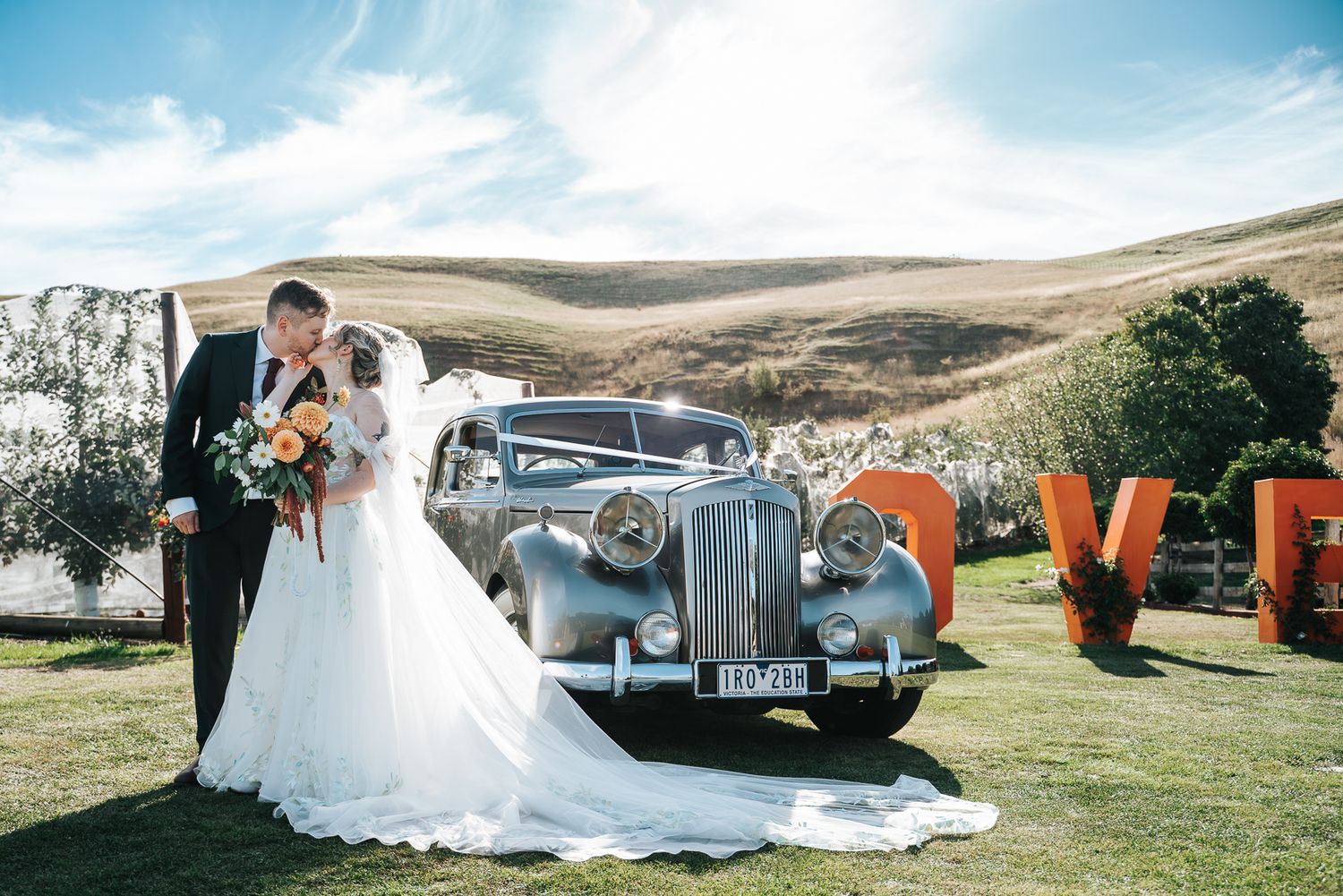
Travel between locations: the invisible time thief
Let's come back to locations, because this deserves its own section.
The stretch of time between your ceremony ending and your reception beginning is usually when couple portraits and family photos happen. It is often one of the most photographically productive parts of the day. It is also, on many Melbourne weddings, when the most time gets swallowed up by logistics.
If your ceremony venue and reception venue are different, your photographer needs to get from one to the other. So does your bridal party. So do your guests. In an ideal world, everyone arrives, portraits happen, and then the reception begins. In the real world, there are delays, traffic, venues that are 40 minutes apart, and a couple who is suddenly realising they are hungry and their shoes hurt.
Practical things to think through now:
- If your venues are more than 20 minutes apart, factor that travel time explicitly into your schedule.
- Ask your photographer how they handle venue transitions. A solo Melbourne wedding photographer is covering that travel themselves, often with gear, and needs realistic time to do it.
- Consider whether there are portrait locations near either venue that could save travel time entirely.
The couples who feel most relaxed after their ceremony are almost always the ones who had a realistic plan for this window, not an optimistic one.
Reception: your night, not a shot list
By the time you reach your reception, a good Melbourne wedding photographer has done most of the structured work. The rest of the night is documentary. Speeches, first dance, the moment someone pulls you onto the floor even though you said you were not dancing. The way your best friend looks at you from across the room.
These photos do not need to be directed. They just need your photographer to be there and paying attention.
A few small things that help: let your MC know your photographer's name so they can give a heads up before key moments. If you are doing a sparkler exit or grand send-off, let your photographer know well in advance because these require a little setup. And then, honestly, just be at your wedding. The photos will happen.
How a good Melbourne wedding photographer helps you plan this
The right photographer does not just show up on the day. They help you build a timeline that works before you ever meet at a venue.
When you book, one of the first conversations we have is about your locations, your travel times, your ceremony timing, your sunset time, your family structure, and what moments matter most to you. Then we build something together that protects all of it.
Hi, I am Pei and I am a Melbourne Family, Couples, and Wedding photographer. I am based in Point Cook and photograph weddings across Melbourne and the western suburbs. If you are newly engaged and starting to think through what your day looks like, I would genuinely love to help you work through this, even before you have made any decisions. That is exactly the kind of conversation I enjoy having.
You are only going to do this once. Getting the timeline right early is one of the most useful things you can do for yourself. Want a sample Melbourne wedding day timeline? Contact me anytime, and I will send that through for free. Book your wedding day coverage with me in 2026 to enjoy a 10% off all wedding packages. Enquire for more information.
Looking for a Melbourne wedding photographer, Melbourne couples photographer, or a Melbourne family photographer who will be with you from the proposal through to the years that follow? Get in touch and let's start with a conversation about your day through the contact form below: